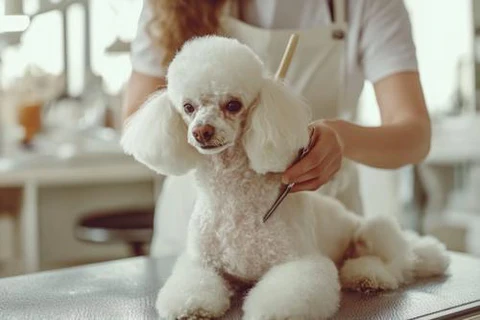
How to Care for a White Coat on a Poodle
Primary Keyword: White Coat on a Poodle
Secondary Keywords: Poodle white coat care, white Poodle grooming, how to keep a Poodle white, Poodle coat care, white Poodle hair, Poodle tear stains, Poodle grooming tips, Poodle bathing, Poodle coat cleaning
A clean, bright white coat is one of the most beautiful features of a white Poodle. However, keeping that coat looking fresh and healthy requires more than occasional bathing. White hair can easily show dirt, stains, food residue, and discoloration, especially around the face, paws, and other areas that come into frequent contact with moisture.
With the right grooming routine, you can help maintain a soft, clean, and beautiful white coat on a Poodle while also supporting healthy skin and hair.
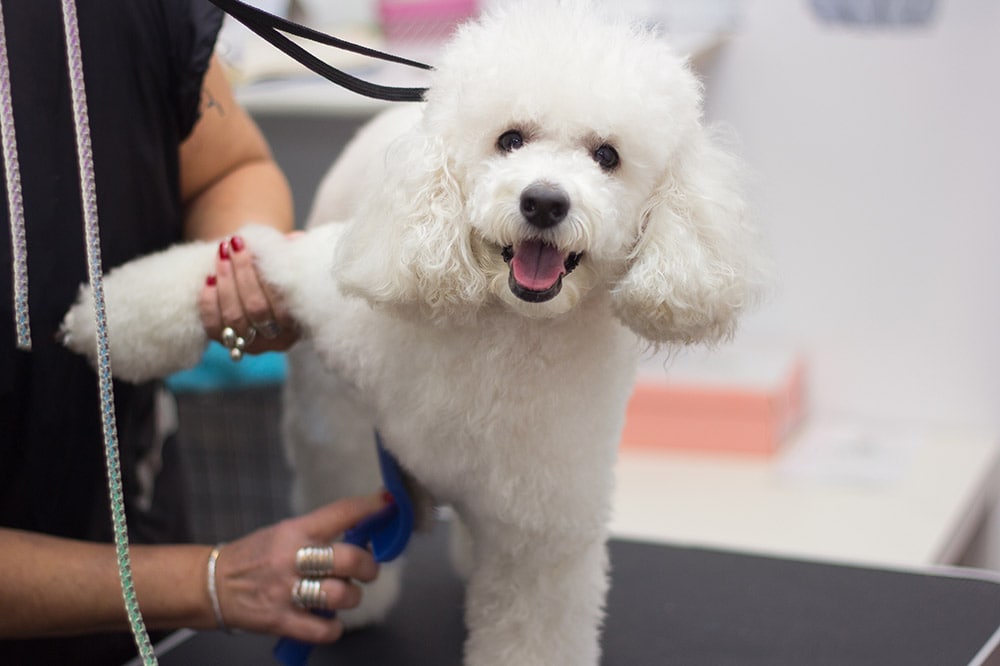
Why Is White Poodle Hair So Difficult to Keep Clean?
White Poodle hair makes stains and dirt much easier to see than darker coats.
Several everyday factors can affect the appearance of a white coat:
-
Dust and dirt from outdoor activities
-
Food and water around the face
-
Tear stains
-
Saliva staining
-
Urine or feces around the rear legs
-
Moisture trapped in the coat
-
Infrequent brushing
-
Skin irritation or allergies
-
Poor grooming habits
Some discoloration is simply cosmetic, while persistent staining may be associated with an underlying skin, eye, or health issue. If staining appears suddenly or is accompanied by irritation, discharge, itching, or hair loss, veterinary advice is appropriate.
Brush Your Poodle Regularly
Regular brushing is one of the most important parts of Poodle coat care.
Poodles have curly hair that can easily form tangles and mats. Once mats develop, dirt and moisture can become trapped close to the skin, making the coat look dull and making bathing less effective.
For most Poodles, brushing several times a week is a good starting point. Dogs with longer coats may need daily brushing.
Use the Right Grooming Tools
A basic grooming kit can include:
-
Slicker brush
-
Metal comb
-
Detangling spray
-
Grooming towel
-
Dog-safe shampoo
-
Soft facial cleaning cloth
-
Dog hair dryer
Work gently through the coat in small sections. Avoid aggressively pulling through knots because this can hurt your Poodle and make grooming stressful.
Keep the Face Clean
The face is one of the most challenging areas when maintaining a white coat on a Poodle.
Food, water, saliva, and tears can cause visible staining around the eyes and mouth.
After meals or drinking, gently wipe the area around the mouth with a clean, damp cloth. Keeping facial hair clean and dry can help reduce the buildup of residue.
For the eye area, use a soft cloth or pet-safe eye-cleaning product recommended for dogs. Avoid harsh household products or products that are not specifically intended for use around a dog’s eyes.
Managing Poodle Tear Stains
Tear staining is particularly noticeable on white Poodles.
Possible contributors include normal tear production, facial hair, eye irritation, allergies, blocked tear drainage, and other eye-related issues.
If your Poodle suddenly develops excessive tearing, redness, swelling, squinting, or eye discharge, do not treat it as a simple cosmetic problem. A veterinarian should check the eyes to identify the underlying cause.
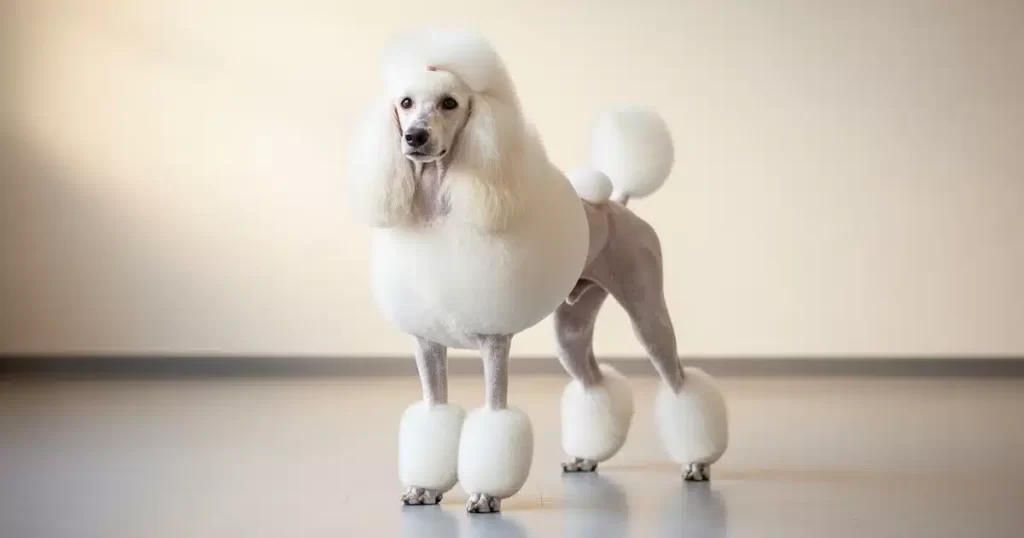
Bathe Your Poodle Correctly
Regular bathing helps remove dirt, oils, and residue from a white coat.
However, bathing too frequently or using inappropriate products can dry out the skin and coat.
Choose a Dog-Safe Shampoo
Use a gentle shampoo formulated specifically for dogs. If your Poodle has sensitive skin, ask your veterinarian or professional groomer about an appropriate product.
Some whitening shampoos are designed to improve the appearance of light-colored coats, but they should be used according to the product instructions.
Never use bleach, household cleaners, or human hair products to make your Poodle’s coat whiter.
Rinse Thoroughly
Shampoo residue can irritate the skin and make the coat feel dull or greasy.
After shampooing, rinse thoroughly until the water runs clear and there is no remaining product in the hair.
Dry the Coat Completely
Proper drying is an often-overlooked part of white Poodle grooming.
Leaving the coat damp can encourage tangling and may create a warm, moist environment against the skin.
After bathing:
-
Gently remove excess water with a towel.
-
Avoid vigorous rubbing that can create tangles.
-
Use a pet-safe dryer at an appropriate temperature.
-
Brush the coat gently while drying if your grooming technique allows.
-
Make sure the coat and skin are completely dry.
Never use excessively hot air because it can irritate or burn your dog’s skin.
Keep the Paws Clean
White Poodle paws can quickly become brown or gray from dirt, grass, mud, and moisture.
Wipe the paws after outdoor walks, particularly during wet weather.
Keeping the hair between and around the paw pads properly trimmed can also make cleaning easier. Regular nail trimming is another important part of complete Poodle grooming.
If the paws become persistently stained, irritated, itchy, or have an unusual odor, consult a veterinarian.
Trim the Coat Regularly
Regular grooming helps keep a white Poodle looking neat and makes the coat easier to maintain.
The appropriate haircut depends on your dog’s lifestyle, coat condition, and your preferred appearance.
A shorter, practical haircut may be easier to keep clean if your Poodle spends a lot of time outdoors. A longer style can look beautiful but usually requires more frequent brushing and maintenance.
Professional grooming can also help prevent severe matting and keep difficult areas around the face, feet, and sanitary region clean.
Pay Attention to Diet and Overall Health
Coat appearance is not determined by grooming alone.
A balanced diet provides the nutrients your Poodle needs to maintain healthy skin and hair. Your dog’s nutritional needs depend on factors such as age, size, activity level, and overall health.
If your Poodle’s coat suddenly becomes dry, brittle, excessively oily, or starts thinning, consider discussing the change with your veterinarian.
Skin allergies, parasites, infections, nutritional problems, and other health conditions can affect coat quality.
Do not give supplements simply to make the coat whiter or shinier without professional guidance.
Avoid Unsafe Whitening Methods
When searching for ways to keep a Poodle white, it can be tempting to try strong cleaning products or homemade remedies.
Avoid using:
-
Bleach
-
Hydrogen peroxide without veterinary guidance
-
Household detergents
-
Strong acids
-
Human whitening products
-
Harsh chemicals
-
Products not formulated for dogs
These substances can irritate or damage the skin, eyes, and coat.
A healthy white coat should be maintained through regular grooming and appropriate pet-safe products rather than aggressive whitening treatments.
Create a Simple White Coat Grooming Routine
Consistency is more important than complicated grooming.
A simple routine might look like this:
Daily:
Check the face, eyes, paws, and rear area. Remove visible dirt and moisture.
Several times a week:
Brush the coat thoroughly and check for tangles or early mats.
Every few weeks:
Bathe your Poodle when needed using an appropriate dog shampoo.
Regularly:
Trim the coat, nails, and hygiene areas as needed.
Periodically:
Schedule professional grooming and veterinary checkups when appropriate.
This routine can help keep your Poodle’s coat cleaner while making grooming easier and more comfortable.
When Should You See a Veterinarian?
Not every stain is caused by poor grooming.
Contact your veterinarian if you notice:
-
Sudden excessive tear production
-
Red or swollen eyes
-
Unusual eye discharge
-
Persistent itching
-
Hair loss
-
Red or irritated skin
-
Strong odor from the skin or ears
-
Repeated paw licking
-
Sudden changes in coat texture
-
Persistent discoloration that does not improve with normal grooming
Treating an underlying health problem is more important than simply covering up the discoloration.
Final Thoughts
Maintaining a beautiful white coat on a Poodle requires regular brushing, appropriate bathing, proper drying, facial cleaning, paw care, and routine grooming.
The goal should not simply be to make your Poodle’s hair look whiter. Healthy skin and a clean, well-maintained coat are the foundation of a beautiful appearance.
With a consistent grooming routine and safe, dog-specific products, you can help your white Poodle stay clean, soft, comfortable, and looking their best.
Frequently Asked Questions
How can I keep my Poodle’s white coat white?
Regular brushing, bathing with dog-safe products, cleaning the face and paws, and keeping the coat dry can help maintain a clean white appearance.
How often should I bathe a white Poodle?
Bathing frequency depends on your Poodle’s coat, lifestyle, skin condition, and how dirty they become. Avoid excessive bathing because it may dry or irritate the skin.
Why does my white Poodle’s face turn brown?
Brown or reddish staining around the face can be associated with tears, saliva, moisture, food residue, or other factors. Persistent or sudden staining should be evaluated if accompanied by eye or skin symptoms.
Can I use whitening shampoo on my Poodle?
Some dog-specific whitening shampoos can be used according to their instructions. Choose products formulated for dogs and avoid harsh chemicals or household whitening products.
How often should I brush my white Poodle?
Regular brushing is important because Poodle hair can tangle and mat easily. Many Poodles benefit from brushing several times a week, while longer coats may require daily attention.