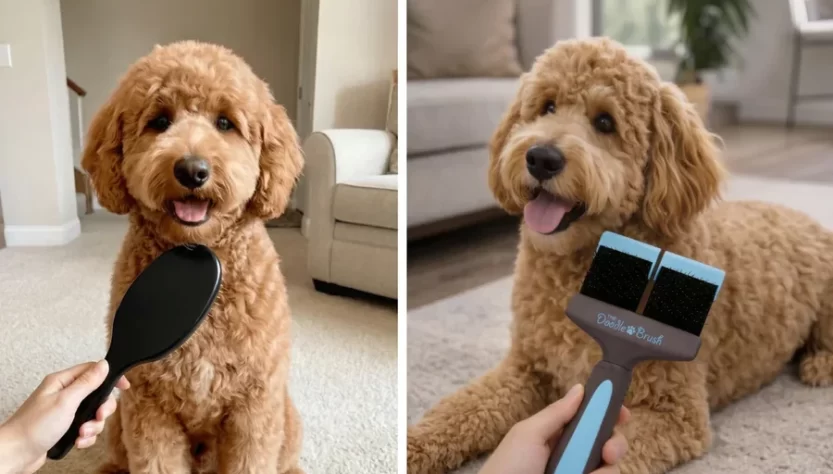
Choosing the best brush for a Poodle is an important part of maintaining a healthy, fluffy, and tangle-free coat. Because Poodles have curly hair that continues to grow and can easily trap loose hair, dirt, and moisture, regular brushing is essential.
But with so many grooming brushes available, which one should you choose?
A slicker brush, pin brush, metal comb, or detangling brush can each have a different purpose. The right choice depends on your Poodle’s coat type, haircut, age, grooming routine, and how easily the coat becomes tangled.
In this guide, you’ll learn how to choose the best brush for a Poodle, how different brush types work, and how to use them safely.
Why Does a Poodle Need Regular Brushing?
Poodles have a unique curly coat that tends to hold onto loose hair instead of shedding it freely.
Without regular brushing, loose hair can become trapped inside the coat and form tangles. Over time, small tangles can develop into tight mats close to the skin.
Regular brushing can help:
- Remove loose hair and dirt
- Prevent tangles and mats
- Keep the coat fluffy and manageable
- Improve the appearance of the haircut
- Make bathing and drying easier
- Allow you to check the skin for abnormalities
- Maintain a cleaner and healthier-looking coat
For more detailed brushing techniques, see our guide on [How to Brush a Poodle].
What Is the Best Brush for a Poodle?
For most Poodles, a slicker brush combined with a metal grooming comb is one of the most useful combinations.
A slicker brush helps separate curly hair and remove loose hair and small tangles. A metal comb can then be used to check whether the coat is completely free of knots.
However, there is no single brush that is perfect for every Poodle.
The best brush depends on:
- Coat density
- Curl pattern
- Hair length
- Haircut style
- Matting tendency
- Age
- Skin sensitivity
- Grooming experience
For example, a Poodle with a long, fluffy Teddy Bear-style haircut may require more frequent brushing than a Poodle with a short Puppy Cut.
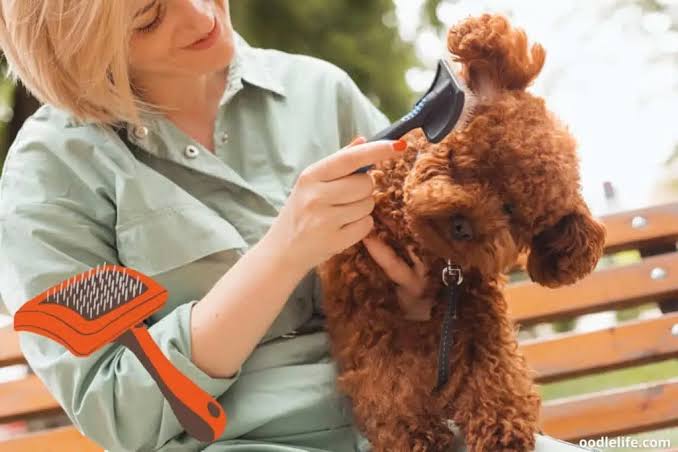
1. Slicker Brush: The Best Everyday Choice
A Poodle slicker brush is one of the most popular grooming tools for curly-coated dogs.
It usually has many fine wire pins designed to separate the hair and remove loose material from the coat.
Benefits of a slicker brush
A good slicker brush can help:
- Separate curly hair
- Remove loose hair
- Reduce small tangles
- Fluff the coat
- Prepare the coat for trimming
- Maintain fluffy Poodle hairstyles
Slicker brushes are particularly useful for Poodles with medium or longer coats.
How to use it
Do not simply brush over the surface of the coat.
Instead, use a line-brushing technique:
- Separate a small section of hair.
- Hold the remaining hair out of the way.
- Brush from the roots toward the ends.
- Work through small sections.
- Move gradually across the body.
- Finish with a metal comb.
This technique helps you reach deeper layers of the coat.
2. Metal Grooming Comb: The Best Tool for Checking the Coat
A metal grooming comb is another essential tool for Poodle owners.
Unlike a slicker brush, a comb is excellent for checking whether tangles remain underneath the surface.
After brushing, gently run the comb through the coat.
If the comb passes smoothly from the roots to the ends, the area is generally well brushed.
If the comb stops or catches, there may still be a tangle.
A metal comb is especially useful for:
- Checking behind the ears
- Checking the legs
- Checking the chest
- Checking the armpits
- Checking around the tail
- Checking the beard and muzzle
- Checking long fluffy coats
A slicker brush and metal comb work particularly well together.
Brush first, comb second.
3. Pin Brush: When Is It Useful?
A pin brush has longer, usually more widely spaced pins than a slicker brush.
It can be useful for gently grooming longer coats and helping maintain a fluffy appearance.
However, a pin brush may not be enough to remove deeper tangles from a dense Poodle coat.
It is often better used as part of a grooming routine rather than as the only brush.
For heavily curly or dense coats, a slicker brush is generally more practical for detailed coat separation.
4. Detangling Brushes and Tools
Some grooming tools are specifically designed to help with tangles.
These can be useful for minor knots, but they should be used carefully.
If a Poodle has a large or tight mat, repeatedly pulling at it with a brush can cause discomfort and potentially irritate the skin.
Never force a brush through a difficult mat.
For severe matting, professional grooming may be the safest option.
Read our complete guide:
Poodle Matting: How to Prevent and Remove Mats Safely
5. What About a Grooming Rake?
Grooming rakes are more commonly associated with dogs that have thick undercoats.
Poodles do not have the same type of shedding undercoat as many double-coated breeds, so a rake is not usually the first grooming tool to choose for a Poodle.
For most Poodle owners, a quality slicker brush and metal comb are more useful.
Using the wrong tool can lead to unnecessary pulling or coat damage.
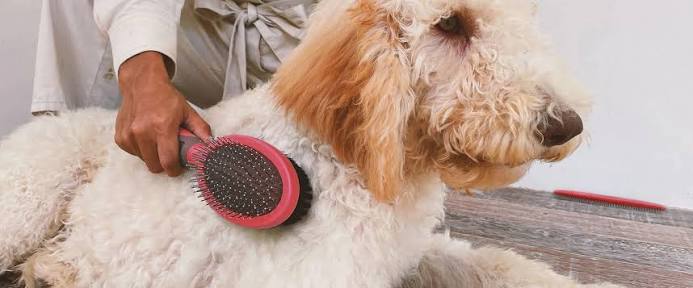
Slicker Brush vs. Pin Brush vs. Comb
| Grooming Tool | Main Purpose | Best For |
|---|---|---|
| Slicker Brush | Separating and brushing the coat | Daily/regular coat maintenance |
| Metal Comb | Checking for remaining tangles | Final coat inspection |
| Pin Brush | Gentle brushing and fluffing | Longer, fluffy coats |
| Detangling Brush | Working through small tangles | Minor knots |
| Grooming Rake | Removing undercoat | Usually not necessary for most Poodles |
For most Poodle owners, the simplest starter combination is:
Slicker Brush + Metal Comb
How to Choose the Right Slicker Brush
Not all slicker brushes are the same.
When choosing a brush for your Poodle, consider the following factors.
1. Brush Size
A small brush can be easier to control around the face and legs.
A larger brush may save time when working on the body.
Many owners find it useful to have different sizes for different areas.
2. Pin Length
The pins should be appropriate for your Poodle’s coat length.
Very short hair may not require long pins, while a thick, longer coat may benefit from a brush that can reach deeper into the hair.
3. Pin Flexibility
The pins should be effective but not excessively harsh.
Because Poodle skin can be sensitive, avoid aggressive brushing or excessive pressure.
4. Handle Comfort
If you groom your Poodle regularly, an ergonomic handle can make a significant difference.
Comfortable tools make it easier to maintain a consistent grooming routine.
The Best Brush for Different Poodle Haircuts
Your Poodle’s haircut can affect which brush is most useful.
Teddy Bear Cut
A Teddy Bear Poodle with a longer, fluffy coat usually requires frequent brushing.
A slicker brush followed by a metal comb is a good combination for maintaining the rounded, fluffy appearance.
Puppy Cut
A shorter Puppy Cut is generally easier to maintain.
A slicker brush and comb can still help prevent tangles, especially around the ears, legs, and collar area.
Asian Fusion Cut
Asian Fusion styles often feature longer, carefully shaped areas.
Regular brushing is important for preserving the fluffy appearance and preventing mats.
Long Fluffy Coat
The longer the coat, the greater the potential for tangles.
Long coats usually require more frequent brushing and careful line brushing.
Short Poodle Haircut
Shorter styles generally require less brushing, but areas such as the ears, tail, legs, and face can still become tangled.
Best Brush for a Poodle Puppy
Poodle puppies should be introduced to grooming gradually.
The goal is not simply to make the puppy’s coat look perfect.
You also want the puppy to become comfortable with:
- Being touched
- Having its legs handled
- Having its ears checked
- Standing on a grooming surface
- Feeling a brush against the coat
- Having the face gently handled
Start with short, gentle sessions.
Reward calm behavior with praise and appropriate treats.
Never turn brushing into a stressful experience.
A positive early grooming experience can make professional grooming much easier later in life.
How Often Should You Brush a Poodle?
Brushing frequency depends on coat length, haircut, lifestyle, and matting tendency.
As a general guideline:
- Short coat: several times per week
- Medium coat: every day or nearly every day
- Long fluffy coat: daily brushing is often necessary
- Matted or easily tangled coat: more frequent maintenance may be needed
Active Poodles may also need additional brushing after outdoor activities.
The important thing is consistency.
A few minutes of regular grooming is usually easier than trying to remove large tangles after several days without brushing.
How to Brush a Poodle Correctly
Using the right brush is only half the job. Technique matters too.
Step 1: Start with a calm Poodle
Choose a quiet environment where your dog feels comfortable.
Step 2: Separate the coat
Work with small sections instead of brushing the entire body at once.
Step 3: Use line brushing
Move the hair aside and brush from the roots through the ends.
Step 4: Use gentle pressure
Avoid repeatedly scraping the skin.
Step 5: Check with a comb
After brushing each section, use a metal comb to check for hidden tangles.
Step 6: Pay attention to problem areas
Spend extra time around:
- Ears
- Armpits
- Legs
- Collar area
- Tail
- Chest
- Belly
These areas can develop mats quickly.
Common Brushing Mistakes to Avoid
Even with a good brush, some common mistakes can cause problems.
Brushing only the surface
The top layer may look smooth while deeper layers are still tangled.
Pulling hard on mats
This can be uncomfortable and may irritate the skin.
Brushing too aggressively
More pressure does not necessarily mean better grooming.
Using the wrong brush
A tool designed for another coat type may not be suitable for a Poodle.
Skipping the metal comb
A brush may make the coat look smooth without completely removing hidden tangles.
Waiting until the coat is badly tangled
Prevention is much easier than removing severe mats.
Should You Brush a Poodle Before or After Bathing?
Ideally, brush and detangle the coat before bathing.
Water can tighten existing tangles and make mats more difficult to manage.
A typical routine is:
Brush → Bathe → Rinse → Dry → Brush/Fluff → Comb
Proper drying is particularly important for Poodles because moisture left inside a dense curly coat can contribute to tangling.
For more information, read:
How to Dry a Poodle After Bathing: Complete Grooming Guide
How to Keep a Poodle Fluffy After Brushing
If you want a fluffy Poodle coat, brushing should be combined with proper bathing and drying.
A useful routine is:
- Use an appropriate dog shampoo.
- Rinse thoroughly.
- Remove excess water with a towel.
- Blow dry while brushing small sections.
- Use a slicker brush to separate the curls.
- Finish with a metal comb.
- Check for remaining tangles.
This technique can help create a fuller-looking coat.
For a complete guide, see:
How to Make a Poodle Fluffy: Complete Coat Care Guide
When Should You Replace a Poodle Brush?
Grooming tools should be checked regularly.
Consider replacing a brush if:
- Pins are bent or damaged
- The brush has sharp or rough edges
- The handle is broken
- The brush no longer works effectively
- The pins are heavily worn
- Cleaning the brush becomes difficult
Keeping grooming tools clean is also important.
Remove trapped hair after each grooming session and clean the brush according to the manufacturer’s instructions.
What Should Be in a Basic Poodle Grooming Kit?
For beginners, you do not need dozens of tools.
A practical starter kit can include:
- Slicker brush
- Metal grooming comb
- Dog shampoo
- Dog conditioner if appropriate
- Dog dryer
- Grooming scissors
- Nail clippers or grinder
- Detangling spray
- Towels
The tools you need may change as your grooming skills and your Poodle’s haircut develop.
See our complete guide:
Poodle Grooming Tools: Complete Guide for Beginners
Simple Poodle Brushing Routine
Here is an easy routine for beginners:
Daily or Regularly
- Check for tangles
- Brush high-friction areas
- Check the face and ears
Several Times a Week
- Thoroughly brush the entire coat
- Use a metal comb afterward
After Bathing
- Dry the coat completely
- Brush while blow drying if appropriate
- Check the coat with a comb
Before a Professional Grooming Appointment
- Keep the coat clean and free from new tangles
- Tell the groomer about your preferred haircut
- Mention any sensitive areas or grooming concerns
Frequently Asked Questions
What is the best brush for a Poodle?
A quality slicker brush is one of the most useful brushes for a Poodle. A metal grooming comb is also highly recommended for checking the coat and finding hidden tangles.
Is a slicker brush good for Poodles?
Yes. Slicker brushes are commonly used for Poodle coats because they can help separate curly hair, remove loose hair, and reduce small tangles when used gently.
Should I use a pin brush or slicker brush on my Poodle?
A slicker brush is generally more versatile for regular Poodle coat maintenance. A pin brush can be useful for longer, fluffy coats and gentle finishing.
Can I brush a Poodle every day?
Yes. Daily brushing can be especially useful for Poodles with longer or fluffy coats that are prone to tangling.
How do I remove a small Poodle mat?
For a small, loose tangle, gently separate the hair and work through it gradually with an appropriate brush or comb. Never forcefully pull a tight mat.
Should I brush my Poodle before bathing?
Yes. Removing tangles before bathing can help prevent mats from becoming tighter when the coat gets wet.
Can the wrong brush damage a Poodle’s skin?
Yes. Excessive pressure, aggressive brushing, or inappropriate tools can irritate the skin. Always brush gently and stop if your dog shows signs of discomfort.
What brush is best for a fluffy Poodle?
A slicker brush combined with a metal grooming comb is a practical choice for maintaining a fluffy Poodle coat. Proper drying and regular brushing are equally important.
Final Thoughts
Choosing the best brush for a Poodle does not have to be complicated.
For most Poodle owners, a quality slicker brush and metal grooming comb provide an excellent starting combination. The slicker brush helps separate and maintain the curly coat, while the comb helps you check for hidden tangles.
Remember that the best grooming routine depends on your Poodle’s coat length, haircut, lifestyle, and tendency to mat.
Regular, gentle brushing is far more effective than waiting until the coat becomes heavily tangled.
With the right tools and a consistent routine, you can help keep your Poodle’s coat clean, fluffy, comfortable, and easier to maintain.
Explore more Poodle grooming guides at PetLoves.top for practical tips on brushing, bathing, drying, haircuts, coat care, and grooming maintenance.