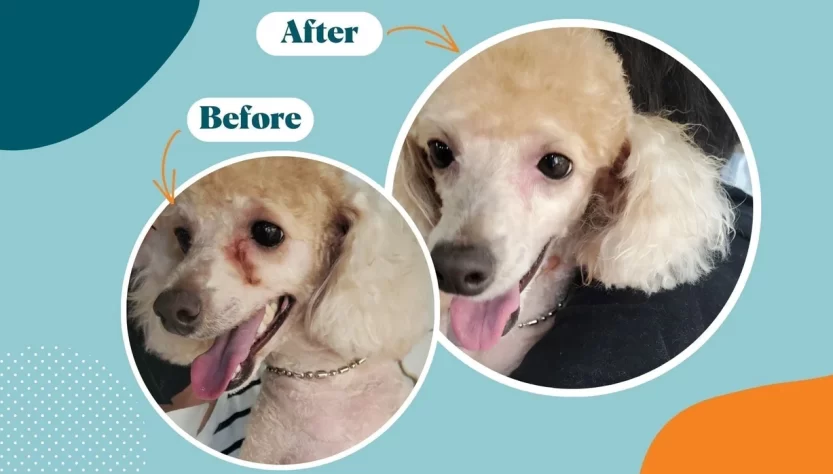
Dog tear stains are a common grooming concern, especially in breeds with white or light-colored coats such as Poodles, Maltese, Shih Tzus, Bichon Frises, and other small companion dogs.
Those reddish-brown marks beneath the eyes may begin as a small, barely noticeable patch but can gradually become darker, wider, and more difficult to manage.
The good news is that early care and proper daily grooming can help keep dog tear stains under control. The first step is to determine how severe the staining is.
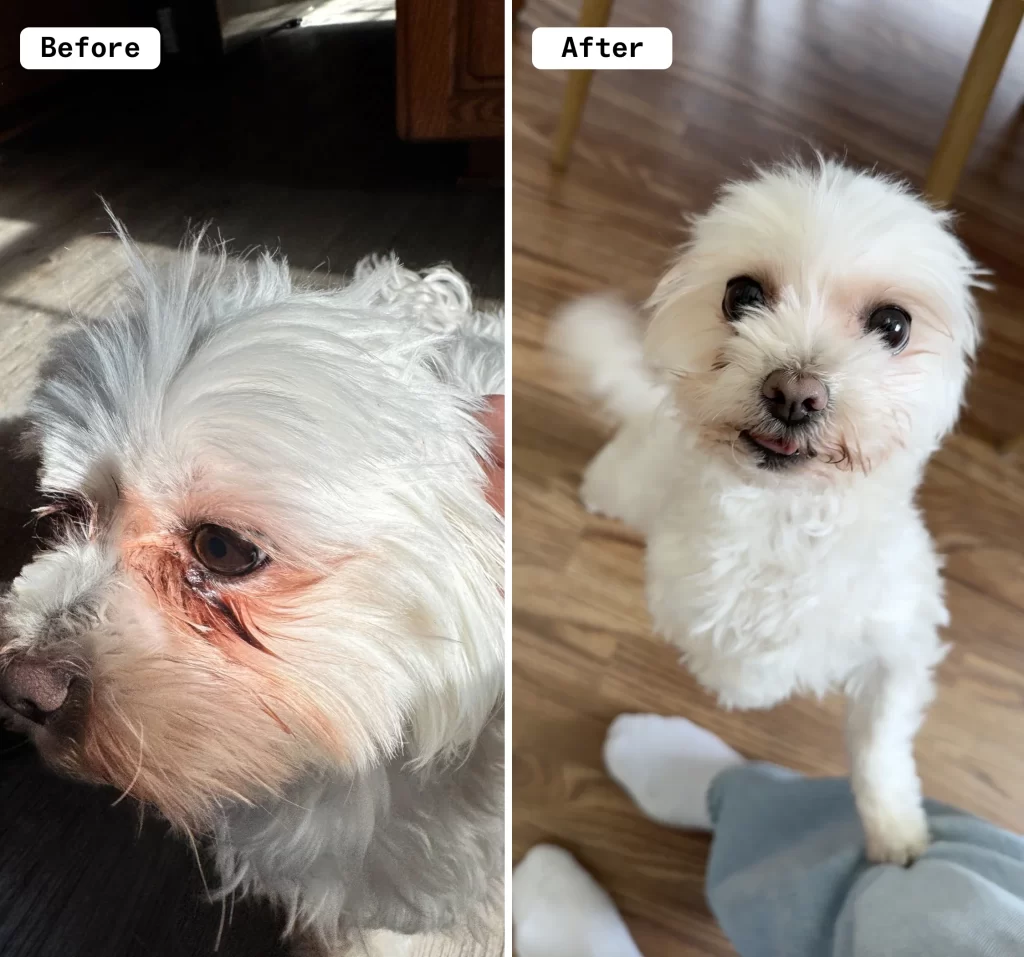
Self-Check: What Stage Are Your Dog’s Tear Stains At?
Take a close look at the fur around your dog’s eyes and compare it with the stages below.
1. Mild Dog Tear Stains
At the mild stage, the staining is usually easy to overlook.
Typical signs include:
- A small amount of reddish-brown or rust-colored discoloration
- Slightly damp fur around the inner corner of the eye
- Staining limited mainly to the area beneath or beside the inner eye
- Fur remains soft and relatively easy to brush
- No significant matting or clumping
If your dog is at this stage, consistent daily cleaning and keeping the eye area dry may help prevent the staining from becoming more noticeable.
2. Moderate Dog Tear Stains
Moderate tear stains are more obvious and require more regular grooming.
You may notice:
- A reddish-brown streak extending downward from the inner corner of the eye
- A larger area of discolored fur
- Fur that stays wet for longer periods
- Hair becoming tangled or matted
- Tear staining becoming more noticeable after grooming
When tears repeatedly wet the same area, moisture can cause the surrounding hair to stick together. Regular cleaning, gentle brushing, and appropriate trimming can help keep the area cleaner and easier to maintain.
3. Severe Dog Tear Stains
Severe staining covers a much larger area and can be accompanied by significant matting.
Possible signs include:
- Dark brown or reddish-brown staining beneath both eyes
- Staining spreading farther down the face
- Large sections of fur becoming heavily discolored
- Severe matting around the eyes and cheeks
- Persistent wetness or discharge
If tear staining is extensive, persistent, suddenly worse, or accompanied by redness, swelling, squinting, an unpleasant odor, or abnormal eye discharge, consult a veterinarian rather than relying only on grooming treatments.
Persistent tearing can sometimes be associated with eye irritation, blocked tear ducts, allergies, eyelid or eyelash problems, infection, or other medical conditions.
How to Remove and Manage Dog Tear Stains
Once you have identified the condition of your dog’s tear stains, establish a simple and gentle eye-care routine.
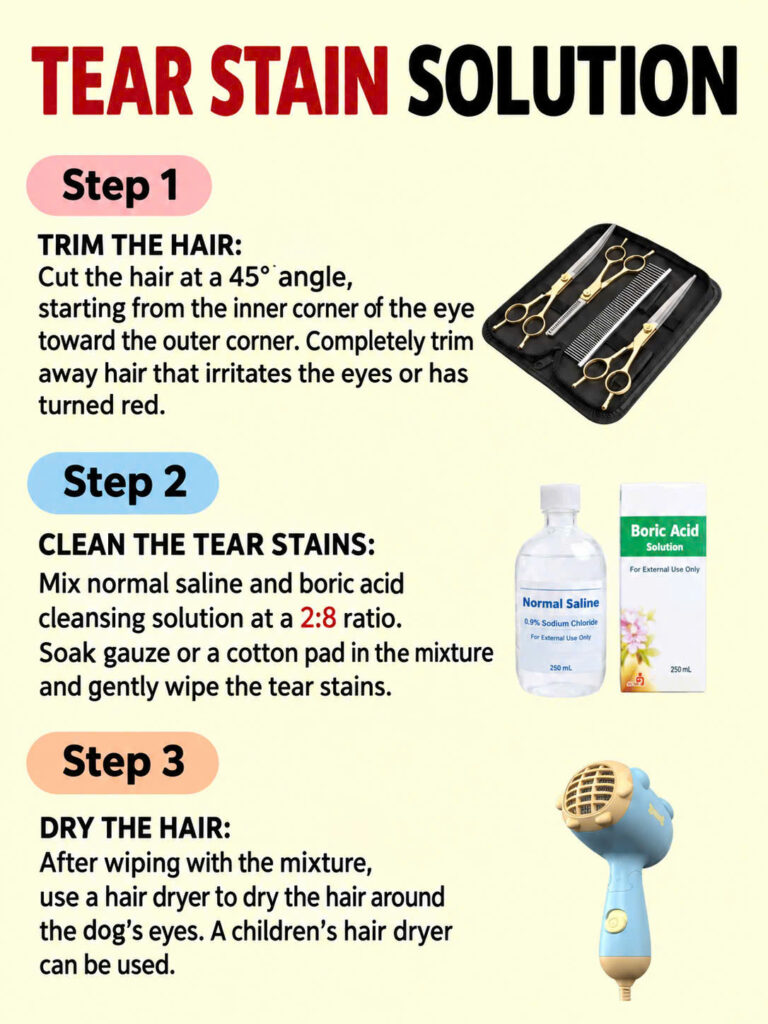
1. Trim Excess Fur Around the Eyes
Long hair around the eyes can trap moisture and may irritate the eye.
If you are experienced with grooming, carefully trim excess hair around the eye area using appropriate grooming scissors. Keep the scissors away from the eyeball and avoid cutting when your dog is moving suddenly.
For nervous dogs or heavily matted fur, professional grooming is the safer option.
Never pull or cut tightly attached mats close to the eye.
2. Gently Clean the Eye Area
Use a veterinarian-approved eye cleaning solution or sterile saline and a clean, soft gauze pad or cotton pad.
Gently wipe the fur around the eye, moving away from the eye rather than rubbing aggressively.
Important:
- Use a fresh pad for each eye
- Do not scrub the skin
- Avoid getting cleaning products directly into the eye unless they are specifically designed for ocular use
- Do not use homemade chemical mixtures around your dog’s eyes without veterinary guidance
The eye area is extremely sensitive, so gentle and consistent cleaning is much better than aggressive stain removal.
3. Keep the Fur Dry
After cleaning, gently pat the area dry with a clean towel or gauze.
Moisture left around the eyes can contribute to continued staining and matting.
If you use a pet dryer, choose a low, cool setting and keep the airflow at a safe distance from your dog’s eyes. Never use hot air directly around the face.
4. Prevent Matting
Once the fur is dry, gently comb or brush the surrounding hair if it is long enough to tangle.
Regular grooming is especially important for Poodles and other curly-coated breeds because their hair can trap moisture and form mats quickly.
Rather than trying to remove dark staining overnight, focus on maintaining clean, dry, healthy fur. Stained hair may need to grow out before the coat returns to its normal appearance.
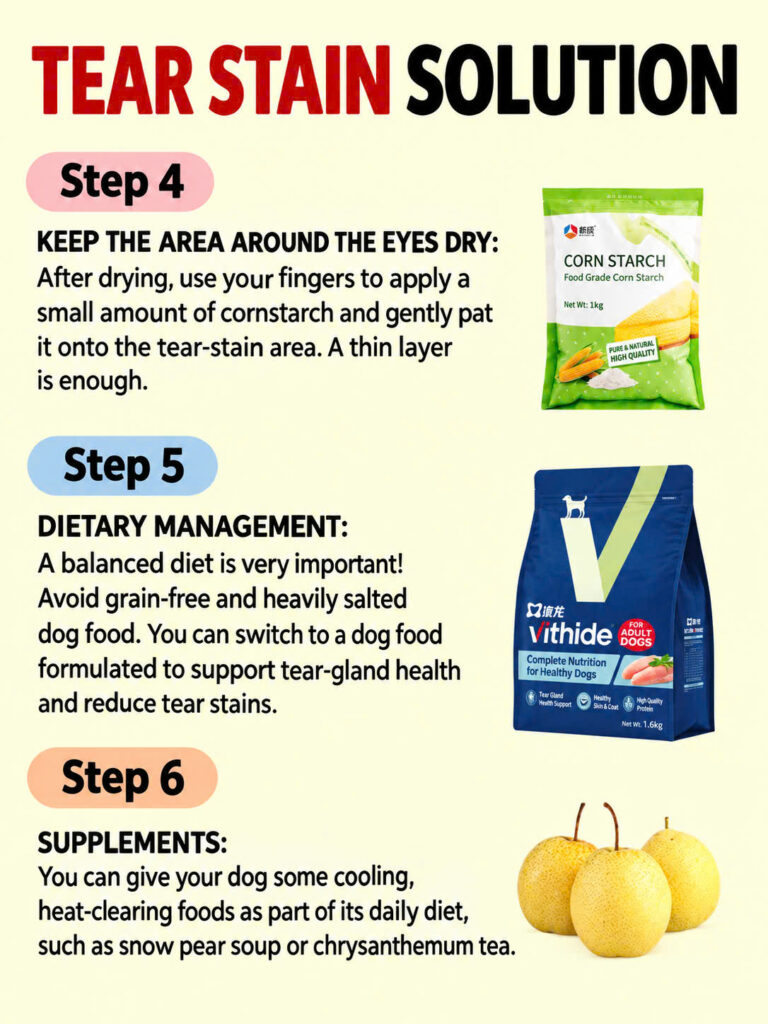
5. Review Your Dog’s Diet
Diet can be an important part of overall pet health, but there is no single food that can guarantee the elimination of tear stains.
Choose a complete and balanced dog food appropriate for your dog’s age, size, and health needs. Avoid excessively salty foods, table scraps, and poor-quality diets.
If you suspect that food sensitivity or allergies may be contributing to excessive tearing, speak with your veterinarian before making major dietary changes.
Do not give herbal drinks, soups, supplements, or human foods specifically to “cool the body” or treat tear stains unless your veterinarian recommends them.
6. Look at the Bigger Picture
Tear stains are not always simply a grooming problem.
If your dog suddenly develops excessive tearing, especially in only one eye, or develops:
- Red or swollen eyes
- Squinting
- Frequent pawing at the face
- Yellow or green discharge
- Eye pain
- Cloudiness of the eye
- A noticeable change in tear production
your dog should be examined by a veterinarian.
Treating the underlying cause is more important than simply removing the visible stain.
How to Prevent Dog Tear Stains From Getting Worse
Prevention starts with a simple daily routine.
Clean the eye area regularly
A quick, gentle wipe can remove tears and debris before they dry onto the coat.
Keep facial hair properly groomed
Regular trimming can reduce moisture accumulation around the eyes.
Keep your dog’s face clean and dry
After drinking, bathing, or playing outdoors, check the fur around the eyes and mouth.
Maintain good overall health
Regular veterinary checkups, balanced nutrition, dental care, grooming, and parasite prevention all contribute to your dog’s general health.
Avoid harsh stain-removing products
Products designed to bleach or dramatically change the color of the fur may irritate sensitive skin or eyes. Always check that a product is specifically intended for dogs and follow the instructions carefully.
Can Dog Tear Stains Be Removed Completely?
This depends on the cause.
If the staining is primarily related to excessive moisture and facial hair, improving grooming and keeping the area clean and dry may significantly improve its appearance.
However, if excessive tearing is caused by an anatomical problem, allergies, irritation, infection, blocked tear ducts, or another medical condition, simply cleaning the fur will not solve the underlying problem.
Remember that tear-stained hair often cannot return to its original color immediately. The stained hair may need to be trimmed gradually as healthy new hair grows.
Final Thoughts
Dog tear stains are easier to manage when you catch them early.
A small reddish-brown mark around the inner corner of the eye may seem harmless, but regular moisture can eventually lead to darker staining, tangled hair, and matting.
The best approach is simple: check the eyes regularly, clean gently, keep the fur dry, maintain appropriate grooming, provide a balanced diet, and pay attention to changes in your dog’s eyes.
If tear staining becomes severe or is accompanied by unusual discharge, redness, pain, or excessive tearing, don’t treat it as a cosmetic problem alone. A veterinary examination can help identify the real cause.
With consistent dog tear stain care, many dogs can maintain a cleaner, healthier-looking face and a more comfortable eye area.