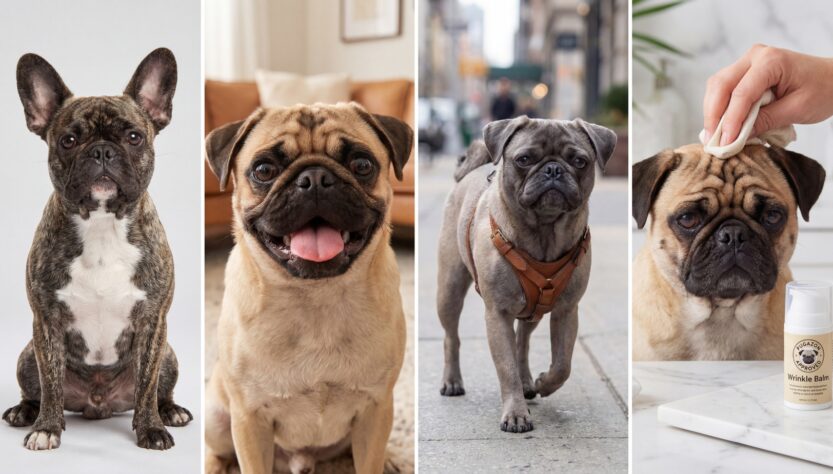
Pugs, also affectionately called “French pub dogs,” are one of the most beloved dog breeds thanks to their adorable appearance with their characteristic wrinkled faces and friendly personalities. However, due to their unique physical characteristics (short muzzle, many skin folds), caring for Pugs requires more meticulousness and knowledge than many other dog breeds. With proper care, Pugs will not only be healthy but also live happily and stay with their families for a long time. This article will help you understand how to comprehensively care for your Pug.
- Proper Nutrition for Pugs
Pugs tend to gain weight easily, so their diet needs to be carefully controlled. You should feed your dog nutrient-rich foods such as meat (chicken, beef, pork), eggs, and fish combined with vegetables to supplement vitamins. If using dry food, choose a high-quality type suitable for small dog breeds.
Avoid feeding Pugs too much greasy food, sugary food, or leftover human food. Each meal should be divided into 2–3 moderate portions. Also, always ensure your dog has plenty of clean water to drink.
- Skin and Coat Care
One of the Pug’s distinguishing features is its wrinkled skin. This is also where dirt and bacteria easily accumulate, causing skin infections. You need to regularly clean the folds with a damp cloth, then dry it to prevent mold.
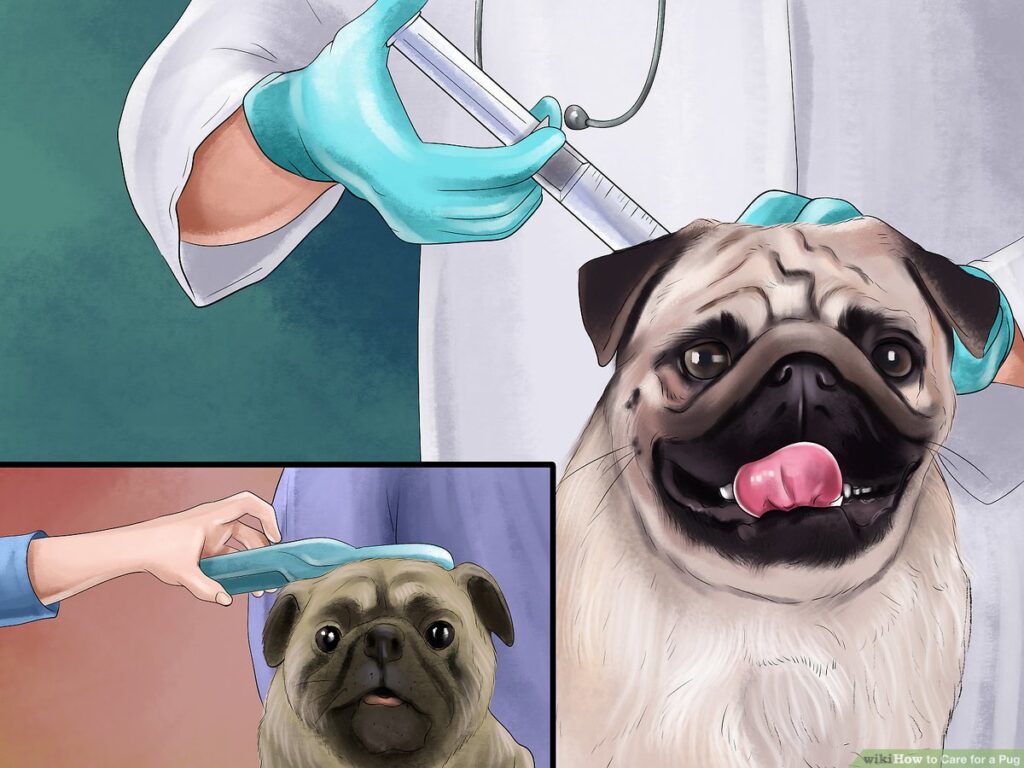
Although Pugs have short fur, they shed quite a lot, especially during shedding season. Brushing 2–3 times a week will help remove loose hair and keep the coat smooth. Bathe your Pug every 2–3 weeks with a specialized shampoo to avoid skin irritation.
- Eye, Ear, and Dental Hygiene
Due to their short facial structure, Pugs’ eyes are often protruding and easily injured. You should check your Pug’s eyes regularly, gently cleaning them with a specialized ear cleaning solution if there is discharge.
Your Pug’s ears also need regular cleaning to prevent infection. You can gently clean them with cotton swabs and ear cleaning solution weekly.
Oral hygiene is very important but often overlooked. Train your dog to brush its teeth 2–3 times a week or use chew bones to help clean its teeth, prevent bad breath, and gum disease.
- Exercise and Play
Although not an overly active breed, Pugs still need daily exercise to maintain health and avoid obesity. You can take your dog for a 15–30 minute walk each day or play gentle games indoors.
However, avoid overexertion or exposure to hot weather, as this breed is prone to heatstroke due to its weak respiratory system.
- Suitable Living Environment
Pugs are best suited to living indoors, especially in a cool, well-ventilated environment. Due to their short muzzles, they are very sensitive to high temperatures. Therefore, in hot weather, you should ensure you have a fan or air conditioner to maintain a stable temperature.
In addition, the dog’s living space needs to be clean, dry, and have a comfortable sleeping area to avoid stress.
- Health Care and Vaccinations
Complete vaccinations are mandatory to protect Pugs from dangerous diseases such as distemper, parvovirus, rabies, etc. You should take your dog for vaccinations on schedule and deworming regularly (approximately every 3-6 months).
Besides that, observe for any unusual signs such as loss of appetite, fatigue, difficulty breathing, etc., and take your dog to the veterinarian promptly.
Caring for a Pug is not too difficult, but it requires patience and proper attention. From nutrition and hygiene to living environment and healthcare, everything plays a crucial role in keeping your Pug healthy and happy. When well cared for, a Pug is not just a pet but also a close friend, bringing joy and laughter to the family.